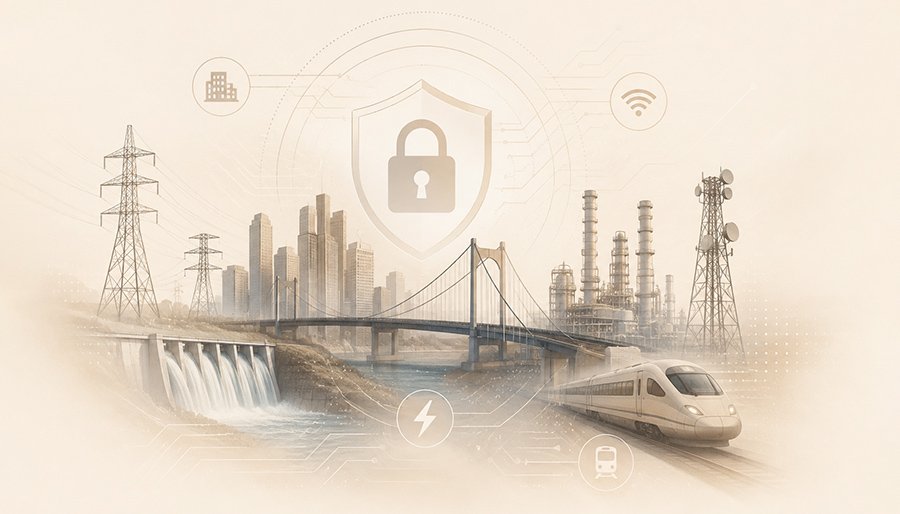
Critical Infrastructure Faces Physical and Digital Pressure
Infrastructure is becoming more interconnected, more heavily used and increasingly exposed to both physical and digital disruption.
The World Economic Forum’s Global Risks Report 2026 identifies ageing infrastructure, extreme weather, financing constraints and geopolitical confrontation as important threats to essential systems. It also highlights growing pressure on electricity, water, transport and communications networks as economies become more digitalised and electrified.
The risks are no longer purely physical. Modern infrastructure depends on software, sensors, remote access and automated control systems. This improves efficiency but also creates cyber-physical exposure, where a digital attack can produce physical damage or interrupt essential services.
Climate change adds another layer. Existing infrastructure may not have been designed for today’s heat, rainfall, flooding or demand patterns. One failure can also create wider consequences where power, telecommunications, transport and water systems depend on each other.
For insurers and reinsurers, infrastructure underwriting therefore requires more than a review of construction values. It should consider design standards, maintenance, redundancy, cyber controls, supply-chain dependencies, emergency response and the consequences of prolonged service interruption.
Accumulation is especially important. A single infrastructure event may affect many insured businesses, public services and communities simultaneously.
The resilience of infrastructure will increasingly determine the resilience of the wider insurance portfolio.